
The Ultimate Guide to AI Resume Screening: Should You Opt Out?
AI resume screening is no longer a futuristic concept—it’s a standard practice in modern hiring. From Fortune 500 companies to fast-growing startups, recruiters increasingly rely on AI based hiring tools to filter through hundreds of applications in seconds. But as a job seeker, you might wonder: Should I opt out of AI resume screening? This guide unpacks how AI screening works, its pros and cons, and—most importantly—how to navigate it to land your next role.
Thank you for reading this post, don't forget to subscribe!What Is AI Resume Screening?
AI resume screening uses machine learning and natural language processing (NLP) to automatically parse, analyze, and rank resumes. Instead of a human reading every application, algorithms scan for keywords, skills, experience, and even writing style to determine which candidates best match a job description.
Common types of AI screening include:
- Keyword matching: Scanning for specific terms like "project management" or "Python."
- Skills extraction: Identifying certifications, tools, and competencies.
- Predictive scoring: Assigning a numerical score based on how well a resume aligns with successful past hires.
Examples of popular AI based hiring tools include HireVue (video interview analysis), Ideal (resume parsing and ranking), and Pymetrics (gamified assessments). These tools promise speed and consistency, but they also raise questions about fairness and transparency.
How Does AI Resume Screening Work?
Understanding the mechanics helps you optimize your application. Here’s a typical step-by-step process:
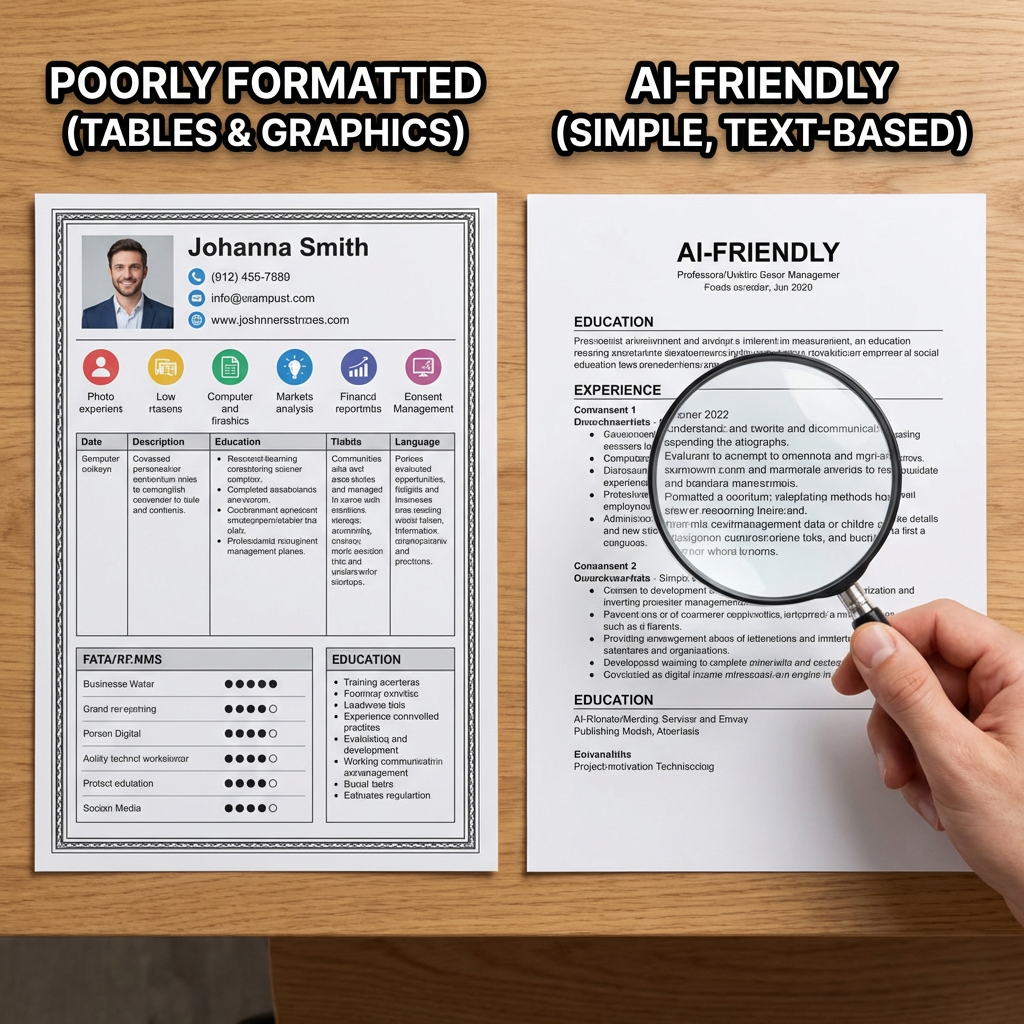
- Parsing: The AI extracts text from your resume, ignoring formatting, images, or tables.
- Keyword analysis: It compares your resume against the job description, flagging matches.
- Ranking: Based on keyword density, skills, years of experience, and other factors, the system scores your resume.
- Shortlisting: Only top-scoring resumes (often the top 10–20%) proceed to a human recruiter.
The training data behind these systems can introduce bias. If an AI was trained on resumes of past hires (who were predominantly from certain backgrounds), it may unfairly favor similar profiles. This is why rule-based systems (which follow explicit instructions) are sometimes preferred over machine learning models that learn patterns autonomously.
Pros and Cons of AI Resume Screening
Pros:
- Speed: Screens thousands of resumes in minutes.
- Scalability: Handles high-volume hiring without fatigue.
- Reduced human bias: Can ignore demographic details if programmed correctly.
- Consistent criteria: Every resume is judged by the same standards.
Cons:
- Over-reliance on keywords: A qualified candidate might be overlooked if they use synonyms or non-traditional phrasing.
- Algorithmic bias: Poorly trained models can perpetuate discrimination.
- Lack of context: Gaps in employment, career changes, or unique achievements may be penalized.
A notorious example is Amazon’s AI hiring tool, which was scrapped after it penalized resumes containing the word "women’s" (e.g., "women’s chess club captain") and downgraded graduates from all-women’s colleges. This case highlights the risks of unchecked AI.
![[Diagram comparing AI vs. human resume screening process, showing parsing, keyword matching, and ranking steps]](https://v3b.fal.media/files/b/0a984d21/ZpZ1YqbAsc3YMpiyIQRKI_XrRWviK5.png)
Should You Opt Out of AI Resume Screening?
The burning question: Should I opt out of AI resume screening? The answer depends on your situation.
When opting out might help:
- Your resume has non-traditional formats (e.g., creative portfolios, freelance work).
- You have significant employment gaps or a non-linear career path.
- You’re applying for roles where human judgment is critical (e.g., leadership, creative arts).
When opting out might hurt:
- The company is large and uses AI as the primary gatekeeper (common in tech, finance, and retail).
- You’re applying for an entry-level or high-volume position where AI is the first filter.
- The job description explicitly mentions "AI screening" or "automated assessment."
Practical advice: Check the job posting for clues. Some companies disclose their use of AI. If in doubt, you can contact HR and ask, "Does your screening process involve automated resume parsing?" If you decide to opt out, submit your application via a direct email to the hiring manager if possible, or use a networking referral to bypass the system.
Best Resume Format for AI Screening
To pass AI screening, your resume must be machine-readable. Follow these best resume format for AI screening guidelines:
- Use standard fonts: Arial, Calibri, or Times New Roman. Avoid decorative fonts.
- Simple layouts: No columns, tables, text boxes, or graphics. AI parsers often misread these.
- Incorporate keywords naturally: Mirror the job description’s language. For example, if the ad says "managed cross-functional teams," use that exact phrase.
- Save as .docx or .pdf: Both are widely compatible, but ensure your PDF is text-based (not scanned images).
- Avoid headers/footers: Some parsers skip content in these areas.
Pro tip: Run your resume through a free parser like Jobscan or Resume Worded to see how it scores before submitting.
How to Screen Resumes Using AI Tools (For Recruiters)
For recruiters, screen resumes using AI tools can be a game-changer—if done ethically. Popular platforms include Lever, SmartRecruiters, and Textio. Here’s how to use them responsibly:
- Define clear criteria: Specify must-have skills and minimum experience to avoid vague scoring.
- Audit for bias: Regularly test the tool with diverse sample resumes to ensure no group is unfairly filtered.
- Combine with human review: Use AI as a first pass, but always have a human review shortlisted candidates.
- Be transparent: Inform applicants if AI is used in screening. This builds trust and allows them to opt out if needed.
Ethical considerations are paramount. Avoid using AI to screen for protected characteristics (race, gender, age) even indirectly. Data privacy laws like GDPR also require you to disclose automated decision-making.
Frequently Asked Questions
Can AI resume screening be fooled?
Yes, some people try "keyword stuffing" (hiding white text with keywords). But modern AI detects this and may flag your resume as spam.
Do all companies use AI for resume screening?
No. Small businesses and startups often rely on manual review. Larger enterprises (500+ employees) are more likely to use AI.
How can I tell if my resume passed AI screening?
If you receive a rejection within minutes or hours, it’s likely AI-driven. A delayed response (days) suggests human review.
What is the future of AI based hiring?
Expect more transparency (e.g., "Explainable AI") and hybrid models where AI assists rather than replaces human judgment. Skills-based assessments may also replace keyword matching.
![[Infographic showing timeline of AI hiring adoption from 2015 to 2025, with key milestones]](https://v3b.fal.media/files/b/0a984d26/YYvWG4PHQKFvup6uCE_Fy_Er0Hxut1.png)
Conclusion
AI resume screening is here to stay, but it doesn’t have to be a barrier. By understanding how these systems work and optimizing your resume accordingly, you can increase your chances of passing the first filter. The key is to tailor your application for both AI and human readers—use relevant keywords, a clean format, and a compelling narrative that stands out even after the algorithm says "yes."
Final recommendation: Don’t opt out of AI screening unless you have a strong reason. Instead, embrace it as a challenge to refine your resume. Ready to get started? Download our AI-Friendly Resume Checklist to ensure your next application passes with flying colors.