

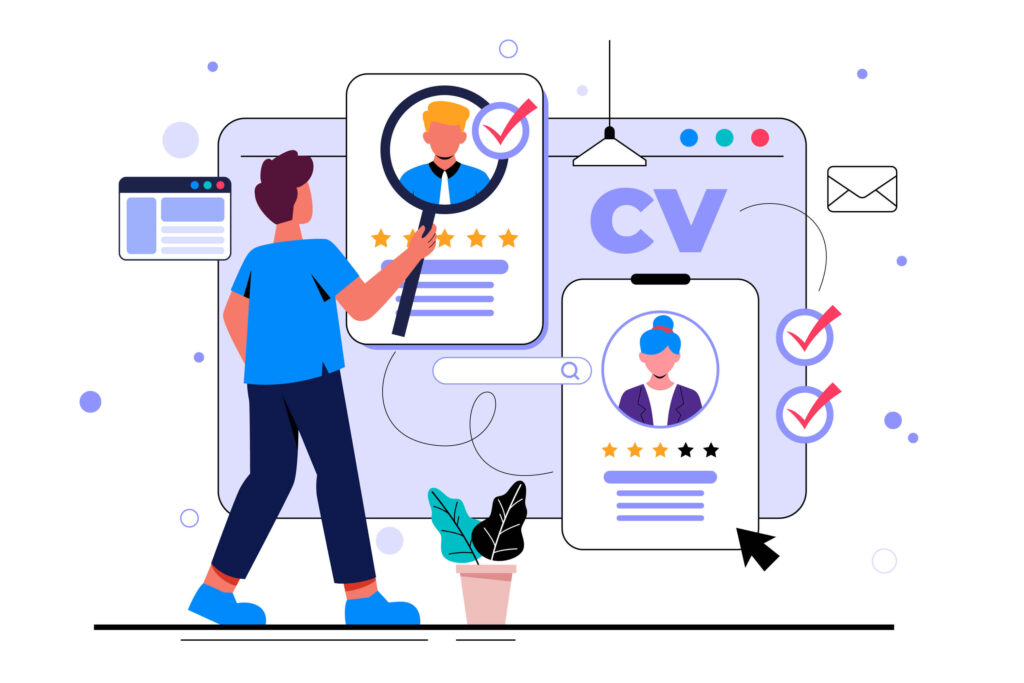
AI Resume Screening Explained: Artificial Intelligence in hiring sounds impressive.
Thank you for reading this post, don't forget to subscribe!But for many HR leaders, founders, and hiring managers, it also sounds intimidating.
Is it an opaque process?
Does it reject excellent candidates unfairly?
Is it truly capable of understanding resumes and job descriptions?
If you’ve ever felt skeptical, you’re not alone.
That’s exactly why AI Resume Screening Explained is a conversation the hiring industry needs right now. When you hear the term “AI,” it can feel complex or overly technical. But in reality, AI Resume Screening Explained simply means understanding how automated systems read, analyze, and rank resumes based on predefined criteria.
This guide to AI Resume Screening Explained will break everything down in simple language—no technical jargon, no buzzwords, and no hype.
By the end, you’ll clearly understand:
- What AI resume screening actually does
- What it does not do
- How it evaluates resumes
- How it reduces hiring mistakes
- Why explainability matters
Let’s start from the beginning.
What Is AI Resume screening? Explained in Simple Terms?
Let’s simplify.
When we say AI resume screening explained, we mean:
The system reads resumes digitally, compares them to a job description, and ranks candidates based on how well they match.
That’s it.
It doesn’t “think” like a human.
>It doesn’t make final hiring decisions.
>It doesn’t secretly reject people without logic.
It simply processes information faster and more consistently than manual resume screening.
Why AI Resume Screening Explained Matters Today
Hiring volume has exploded.
A single job posting in India can attract 200–500 applications. Manual resume screening becomes:
- Time-consuming
- Inconsistent
- Fatigue-driven
- Prone to oversight
This is where understanding how AI resume screening is explained becomes critical.
It’s not about replacing recruiters.
It’s about helping them avoid missing strong candidates—and preventing a costly Bad Hire.
Step-by-Step: AI Resume Screening Explained Clearly
Let’s break down exactly how it works.
Step 1: It Reads the Job Description
Everything starts with the job description.
The AI system analyzes:
- Required skills
- Experience level
- Tools mentioned
- Industry preference
- Role responsibilities
If your job description is vague, the output will also be vague.
Clear input = accurate screening.
This is why optimizing your job description is crucial.
Step 2: It Reads Each Resume Digitally
Instead of a recruiter manually scanning resumes, the AI system:
- Extracts skills
- Identifies work experience
- Recognizes education
- Detects certifications
- Maps career progression
It converts resume content into structured data.
That’s a key part of AI resume screening explained—it transforms unstructured PDFs into comparable information.
Step 3: It Matches Across Multiple Parameters
Here’s where it gets powerful.
Basic systems only match keywords.
Advanced systems—like those built for AI resume screening for Indian SMBs—evaluate across multiple parameters:
- Skill alignment
- Years of relevant experience
- Industry similarity
- Role progression
- Contextual match
This prevents superficial filtering.
And this is where AI resume screening explained becomes more than a keyword search.
Step 4: It Scores and Ranks Candidates
Instead of giving a simple “Yes” or “No,” modern tools assign:
- Fit scores
- Ranking order
- Highlighted strengths
- Match breakdown
For example:
- Skill match: 85%
- Experience relevance: High
- Industry overlap: Medium
This scoring system reduces subjectivity.
That’s the practical core of AI resume screening explained—structured comparison at scale.
What AI Resume Screening Does NOT Do
Let’s clear up misconceptions.
Understanding what AI resume screening explained entails:
- It does not replace HR decision-making
- It does not conduct interviews
- It does not assess personality
- It does not automatically reject candidates without human oversight
It filters and organizes.
Humans still decide.
The Power of Explainable AI
One of the biggest fears around AI is opacity.
“Why did the system rank this candidate higher?”
That’s where explainable AI (artificial intelligence that provides insights into its decision-making process) becomes important.
With explainability, you can see:
- Why Candidate A scored 88
- Why Candidate B scored 72
- Which parameters influenced ranking
This transparency builds trust.
And trust is central to understanding AI resume screening explained properly.
Why Explainable AI Reduces Hiring Risk
When HR leaders can see the scoring rationale, they can better understand the evaluation process.
- They validate results
- They override if needed
- They improve job descriptions
- They align better with hiring managers
This reduces the risk of:
- Missing top talent
- Biased shortlisting
- Rushed hiring decisions
- Expensive Bad Hire outcomes
That’s real business value.
Why Manual Screening Fails at Scale
Let’s compare.
Manual screening:
- Influenced by mood
- Affected by fatigue
- Inconsistent after 100 resumes
- Keyword-biased
- Time-heavy
AI-assisted screening:
- Consistent
- Multi-parameter based
- Structured
- Fast
- Data-backed
This is why AI resume screening, as explained, is not about replacing recruiters—it’s about protecting them from cognitive overload.
Visualizing AI Resume Screening in Action
In a real system:
- You upload the job description.
- You upload resumes in bulk.
- The system processes them.
- You receive a ranked shortlist with scoring rationale.
That’s AI resume screening explained in real-world terms.
Simple. Structured. Transparent.
Why AI Resume Screening Explained Is Crucial for Indian SMBs
Small and medium businesses in India face:
- Lean HR teams
- High application volume
- Limited hiring budgets
- Faster hiring expectations
Manual-only resume screening slows growth.
Adopting AI resume screening for Indian SMBs enables:
- Faster shortlisting
- Reduced hiring delays
- Better candidate matching
- Lower burnout
And because explainability is built in, trust remains intact.
Addressing Common Skepticism
Let’s tackle real concerns.
“Will AI eliminate worthy candidates unfairly?”
Not when explainable scoring is used.
You can review:
- Why a candidate scored low
- What criteria were missing
- Whether manual override is needed
That’s why understanding AI resume screening matters—transparency prevents blind rejection.
“Is AI biased?”
AI reflects structured parameters.
If your job description is fair and criteria are objective, outcomes improve.
Structured systems reduce random human bias.
“Is it too complex?”
Modern tools are plug-and-play.
No coding.
>No IT dependency.
>No heavy integration.
That’s practical AI resume screening, as explained.
The Real Business Impact
When AI resume screening is implemented correctly, it can significantly improve the hiring process.
- Time-to-hire drops
- Screening quality improves
- Hiring manager alignment increases
- Risk of Bad Hire reduces
- HR burnout decreases
And because scoring rationale is visible, leadership confidence grows.
That’s the strategic advantage.
Final Thoughts
AI in hiring shouldn’t feel mysterious.
When broken down simply, AI resume screening is just:
AI resume screening is a structured, transparent, multi-parameter system that compares resumes to job descriptions and consistently ranks them.
It doesn’t replace human judgment.
It strengthens it.
For organizations adopting AI resume screening for Indian SMBs, the shift isn’t about automation hype.
It’s about:
- Accuracy
- Speed
- Transparency
- Trust
And when trust is built through understandable scoring, skepticism fades.
Hiring doesn’t aim to eliminate humans.
It’s about empowering them with better tools.
FAQs
- Does AI replace human recruiters?
No, it supports recruiters by organizing and scoring resumes consistently. - How does AI read resumes?
It extracts skills, experience, and education digitally to compare structured information. - Is AI resume screening accurate?
When multi-parameter scoring is used, accuracy improves compared to manual-only screening. - What is explainable AI in hiring?
It shows the scoring rationale behind candidate rankings for transparency. - Can AI reduce the risk of a Bad Hire?
Yes, better matching and structured screening reduce poor hiring decisions. - Is this for Indian SMBs affordable?
Modern tools are easy to use and affordable for small teams. - Does AI only check keywords?
Advanced systems evaluate contextual alignment, not just keywords. - How important is a job description in AI screening?
Clear job descriptions significantly contribute to more accurate matching. - Is AI biased in hiring?
Structured scoring reduces random human bias when criteria are objectively defined.