

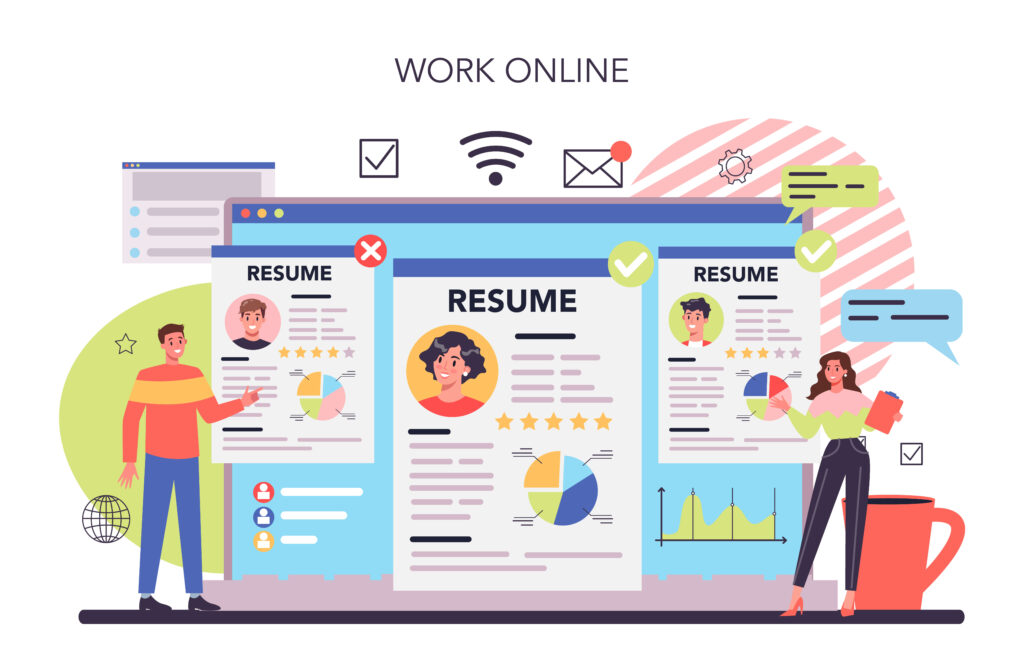
How AI Scores Resumes—and can we trust it?
If you’re a Founder-Recruiter or a Solo HR Manager, you’ve probably faced this dilemma:
- AI gives a score.
- Candidates are ranked.
- But you don’t know what actually influenced the shortlist.
That uncertainty creates hesitation.
This guide breaks down how AI scores resume, the real parameters that matter, and why multi-parameter scoring builds trust in modern hiring.
What Does “How AI Scores Resumes” Really Mean?
At its core, how AI scores resumes refers to the structured evaluation process where artificial intelligence analyzes candidate profiles against a defined job description using multiple data points.
This is not random keyword filtering.
Modern AI systems rely on:
- Structured resume parsing
- Keyword matching + contextual analysis
- Experience weighting
- Education validation
- Skill alignment scoring
- Multi-parameter ranking models
Understanding how AI scores resumes is the first step in eliminating fear around automation.
Step 1: Resume Parsing—Turning Text into Data
Before scoring begins, AI must extract information.
AI-powered resume screening tools convert unstructured resumes into structured fields:
- Name
- Work history
- Job titles
- Skills
- Education
- Certifications
- Career timelines
This process is known as resume parsing.
Without accurate parsing, scoring fails.
Step 2: Job Description Mapping
The next step in how AI scores resumes is alignment.
The system analyzes the job description and identifies:
- Mandatory skills
- Preferred qualifications
- Experience thresholds
- Industry requirements
- Certifications
AI then maps each resume against these criteria.
The clarity of your job description directly impacts scoring accuracy.
Vague requirements = inaccurate rankings.
Step 3: Multi-Parameter Scoring
This is where trust is built.
Modern AI resume screening for Indian SMBs no longer relies on simple keyword matching.
Instead, multi-parameter scoring evaluates:
1. Skills Match
- Core skill presence
- Frequency
- Context usage
- Skill recency
2. Experience Relevance
- Total years in role
- Seniority level
- Industry match
- Career progression consistency
3. Education Alignment
- Required degree match
- Specialized certifications
- Institution relevance (optional weighting)
4. Keyword Context (Not Just Presence)
AI distinguishes between:
- “Managed a Python team”
- “Basic exposure to Python”
Context matters.
This layered logic defines how AI scores resumes in modern systems.
Why Keyword Matching Alone Fails
Older systems relied purely on keyword matching.
The problem?
- Candidates’ game resumes
- Strong profiles with alternative phrasing get missed
- Context is ignored
That’s how Best Candidates Getting Lost in the Pile happens.
Modern AI Resume Screening Explained approaches use contextual NLP to interpret meaning.
Step 4: Weighted Scoring Model
Not all parameters are equal.
For example:
- Mandatory skill = High weight
- Preferred skill = Medium weight
- Nice-to-have certification = Low weight
Weighted scoring ensures critical criteria influence ranking more heavily.
This prevents a Bad Hire caused by surface-level keyword stuffing.
Step 5: Score Breakdown + Explainability
One of the biggest concerns around Black-Box vs. Explainable AI in Hiring is transparency.
Trust improves when AI shows:
- Skills score: 82%
- Experience score: 75%
- Education score: 60%
- Missing required certification
When HR teams understand how AI scores resumes, confidence increases dramatically.
Real Example: Founder Hiring a Sales Manager
Let’s say you’re a founder who hires a sales manager.
AI evaluates:
- Revenue numbers mentioned
- Industry match
- Years in leadership
- CRM tool expertise
- Team management evidence
Candidate A lists “Sales experience.”
Candidate B lists, “Generated ₹4 Cr annual revenue managing an 8-member team.”
The system assigns higher contextual weight to measurable outcomes.
That’s structured intelligence—not guesswork.
Why Founders & Solo HR Managers Need Multi-Parameter Scoring
For a Solo HR Manager, manual screening is time-consuming.
Reviewing 300 resumes means:
- Fatigue
- Missed details
- Inconsistent evaluation
AI reduces resume screening work by:
- Standardizing evaluation
- Removing subjective inconsistency
- Speeding up shortlisting
- Supporting human judgment
Understanding how AI scores resumes reduces fear that AI will override recruiters.
It augments, not replaces.
(See also: Will AI Replace Recruiters—short answer: No.)
The Risk of Poorly Configured AI
AI is only as strong as:
- Job description clarity
- Weight configuration
- Clean training data
- Human oversight
If misconfigured, AI can:
- Over-penalize career gaps
- Favor certain job titles disproportionately
- Miss unconventional talent
That’s why AI resume screening for Indian SMBs; it must prioritize explainability.
How Multi-Parameter AI Reduces Bad Hires
A Bad Hire costs:
- Salary loss
- Productivity impact
- Team morale damage
- Replacement hiring cost
By evaluating multiple data points simultaneously, AI:
- Identifies inconsistencies
- Flags skill exaggeration
- Detects pattern mismatches
- Reduces impulsive shortlisting
Structured evaluation lowers risk.
The Human-AI Partnership
AI handles:
- Data processing
- Pattern detection
- Objective scoring
Humans handle:
- Culture fit
- Soft skills
- Interview performance
- Final hiring decisions
That balance ensures hiring teams retain control.